
Advance your career without stepping away from it.
Designed for certified MLTs, this Bachelor of Science in Medical Laboratory Science honors the expertise you’ve already earned. Build on your experience, strengthen your credentials, and expand your scope of practice in a format designed to fit alongside your professional and personal commitments.
This fully online program, offered by UMA and UMPI, provides a flexible route to career progression.
- 100% online, no campus visits required
- No additional clinical rotations
- Accelerated 7-week courses
- Full-time and part-time options
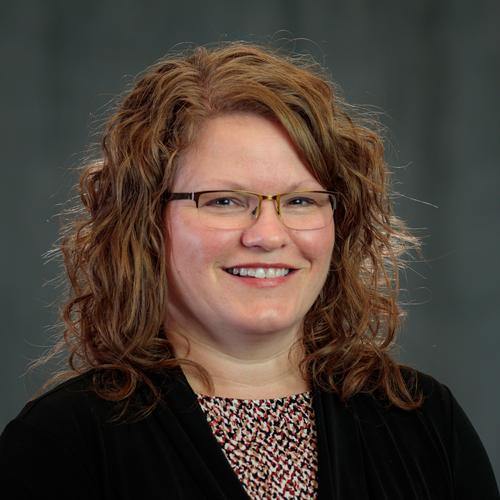
Maine has talented, dedicated MLTs, but until now there hasn’t been a pathway for them to earn their MLS degree without leaving the state. This program changes that. We’re giving laboratory professionals the opportunity to advance their education and strengthen healthcare right here at home.
Leigh Belair,
UMPI MLT Program Director
Sign up for more information!
Career Opportunities
At UMA, earning your MLS bachelor’s degree opens doors to higher-level diagnostic work, specialization, and leadership positions in a field with steady demand across Maine.
What can you do with an MLS B.S. degree?
- Medical Laboratory Scientist
- Laboratory Supervisor or Lead Technologist
- Blood Bank, Microbiology, Chemistry, or Hematology Specialist
- Quality Assurance/Compliance Specialist
- Point-of-Care Testing (POCT) Coordinator
Is This Program a Good Fit for You?
The answer is yes if you:
Hold an associate degree in Medical Laboratory Technology (MLT) or equivalent coursework
Are currently ASCP-certified as an MLT
Want to move into greater technical complexity, specialization, or leadership responsibility
Need a flexible online format that fits your life
Why Choose UMA & UMPI?
The Only MLT-to-MLS Program in Maine
The state’s only bachelor’s program designed specifically for certified MLTs.
Preparation for the Board of Certification
Curriculum structured to support the advanced theoretical knowledge required for MLS certification.
Accreditation
The MLS Program of Maine is a collaborative effort between the University of Maine at Presque Isle and the University of Maine at Augusta.
The MLS Program of Maine is seeking accreditation from:
The National Accrediting Agency for Clinical Laboratory Sciences (NAACLS)
5600 N. River Road, Suite 720
Rosemont, IL 60018
773-714-8880
National Accrediting Agency for Clinical Laboratory Science
The MLS Program of Maine has applied for accreditation and student eligibility to take some certification examinations may depend on whether or not the program achieves “serious applicant” status.
Vision: “Providing Quality MLS Education to Communities Across the State of Maine and beyond.”
Mission: The MLS Online Program of Maine seeks to prepare graduates to provide consistent, quality patient care, including the following entry-level skills:
- Apply knowledge of theory and principles,
- Perform laboratory and quality assurance procedures safely, accurately, and efficiently,
- Evaluate laboratory findings to aid in patient diagnosis and treatment,
- Think critically to recognize errors during each phase of laboratory testing.
- Communicate sufficiently to serve the needs of the patient, public and healthcare team and,
- Make appropriate professional decisions that demonstrate a commitment to the patient and career.
The MLT to MLS Online Program of Maine is committed to providing quality instruction to certified Medical Laboratory Technicians for professional development, career growth opportunities, and increased technical knowledge to provide patient-centered care.
To fulfill the mission of the Medical Laboratory Sciences Program and University as well as meet the needs of the medical laboratory community, the Medical Laboratory Sciences Program will:
- Produce graduates who are effective communicators with all members of the health care team.
- Produce graduates that will demonstrate the technical skills of an entry-level scientist in an ethical and professional manner.
- Maintain a quality program through continuous assessment, evaluation, and revision.
- Maintain qualified faculty that pursues life-long learning and continued professional development.
- Encourage students to be lifelong learners as they seek to maintain professional competency and continuing education for career growth.
- Develop in our students creative and critical thinking skills needed to promote sound and independent judgments.
- Foster leadership through personal examples and to provide a source of leadership knowledge and guidance in medical laboratory science.
- Use innovative educational methods to deliver an exceptional curriculum which best suits the needs of a diverse population.
- Facilitate transfer of knowledge and skills to adapt to a current and evolving scope of practice.
- Foster an environment which develops critical thinking, clinical reasoning, and creative problem solving.
- Develop and investigate innovative educational methods to contribute to best practices in laboratory science education.
- Provide students with opportunities to develop interpersonal attitudes needed to work independently and professionally with patients and other healthcare professionals.
At entry-level, the medical laboratory scientist will possess the entry-level competencies necessary to perform the full range of medical laboratory tests in areas such as Clinical Chemistry, Hematology/Hemostasis, Immunology, Immunohematology/Transfusion medicine, Microbiology, Urine and Body Fluid Analysis and Laboratory Operations, and other emerging diagnostics, and will play a role in the development of and evaluation of test systems and interpretive algorithms.
The medical laboratory scientist will have diverse responsibilities in areas of analysis and clinical decision-making, regulatory compliance with applicable regulations, education, and quality assurance/performance improvement whether laboratory testing is researched, developed or performed.
At career entry-level, the medical laboratory scientist will have the following professional competencies:
They will have the ability to
- Professional Behaviors and Communication
- Demonstrate professional and ethical behavior along with effective interpersonal communication skills when engaging with various stakeholders.
- Establish effective interprofessional working relationships with other health care professionals, demonstrating comprehension of and respect for their roles and patient welfare.
- Recognize and appreciate the importance of engaging with an inclusive workforce through collaboration.
- Value and advocate for a workplace environment that fosters inclusivity, diversity, equity, and accessibility.
- Safety and Compliance
- Comply with government regulations and accreditation standards relevant to the respective discipline.
- Adhere to prescribed protocols for overall laboratory safety, biohazard containment, and waste disposal.
- Implement quality assurance principles to ensure the validity and accuracy of laboratory-generated data.
- Education and Research
- Acknowledge and respond to individual requirements for continuing education and development to foster growth and maintain professional competence.
- Provide instruction to users of laboratory services regarding appropriate procedures, test utilization and interpretation.
- Evaluation clinical research studies and data sets to assess applicability and validity.
- Laboratory Operations
- Employ a logical and systematic problem-solving approach when identifying errors and/or technical issues with laboratory procedures and instrumentation.
- Apply principles of data security to safeguard laboratory and hospital information systems.
- Apply principles of quality assurance to ensure validity and accuracy of laboratory data.
- Recognize principles and practices of laboratory management as applied to clinical laboratory science.
- Pre-Analytical Competencies
- Evaluate specimen collection, processing, and storage procedures in accordance with operating procedures.
- Ensure specimen integrity is maintained throughout the sample procurement process.
- Analytical Competencies
- Adhere to written policies, processes, and procedures for analytical testing, analysis, and instrument maintenance.
- Evaluate and provide rationale for troubleshooting protocols in analytical testing when appropriate.
- Perform routine procedures in accordance with standard operating procedures.
- Apply quality control principles to analytical testing procedures, including instrument calibration, statistical analysis of control results, Westgard rules, and verification of reference ranges.
- Perform basic calculations, dilutions, and statistical analyses for procedures and analytical testing in the respective discipline.
- Apply theoretical principles of instrumentation to current methods of analysis.
- Post-Analytical Competencies
- Perform all post-analytical procedures in accordance with quality assurance protocols and regulatory standards.
- Evaluate results for accuracy and relative to quality control, patient history, specimen integrity, and overall clinical correlation.
- Report test results, including abnormal, STAT, and critical values, in accordance with the laboratory’s standard operating procedures.
Reference: NAACLS Standards updated 10/2025.
The MLT to MLS Online Program of Maine has established minimum essential requirements (separate from academic standards for admission), which every student must meet, with or without reasonable accommodation(s), in order to participate fully in all aspects of training and eventual employment in the clinical laboratory setting. These essential requirements are divided into observational, movement, communication, intellectual, and behavioral categories.
Observational
Ability to participate actively in all demonstrations, laboratory activities and clinical experiences in the professional program component. Such observation and information requires functional use of visual, auditory, and somatic sensations.
- Observe laboratory demonstrations in which biologicals (i.e. body fluids, culture materials, tissue sections, and cellular specimens) are tested for their biochemical, hematological, immunological, microbiological, and histochemical components.
- Characterize the color, odor, clarity, and viscosity of biologicals, reagents, or chemical reaction products.
- Employ a clinical binocular microscope to discriminate among fine structural and color (hue, shading, and intensity) differences of microscope specimens.
- Read and comprehend text, numbers, and graphs displayed in print and on a video monitor.
Movement
Sufficient motor ability to execute the movement and skills required for safe and effective performance of duties.
- Move freely and safely about a laboratory.
- Reach laboratory benchtops and shelves, patients lying in hospital beds, or patients seated in specimen collection furniture.
- Travel to clinical laboratory sites for practical experience.
- Perform moderately taxing continuous work, often requiring prolonged sitting or standing, over several hours.
- Maneuver phlebotomy and culture acquisition equipment to safely collect valid laboratory specimens from patients.
- Possess finger and manual dexterity necessary to control laboratory equipment (i.e. pipettes, inoculating loops, test tubes), adjust instruments to perform laboratory procedures, such as handling small tools and/or parts to repair and correct equipment malfunctions, and transferring drops into tubes of small diameter.
- Use a computer keyboard to operate laboratory instruments and to calculate, record, evaluate, and transmit laboratory information.
Communication
Ability to communicate effectively in English using verbal, non-verbal and written formats with faculty, other students, clients, families, and all members of the healthcare team.
- Read and comprehend technical and professional materials (i.e. textbooks, magazine and journal articles, handbooks, and instruction manuals).
- Follow verbal and written instructions in order to correctly and independently perform laboratory procedures.
- Clearly instruct patients prior to specimen collection.
- Effectively, confidentially, and sensitively converse with patients regarding laboratory tests.
- Communicate with faculty members, fellow students, staff, and other health professionals verbally and in recorded format.
- Independently prepare papers, prepare laboratory reports, and take paper, computer, and laboratory practical examinations.
Intellectual
Ability to collect, interpret, and integrate information and make decisions.
- Possess these intellectual skills: comprehension, measurement, mathematical calculation, reasoning, integration, analysis, comparison, self-expression, and criticism.
- Be able to exercise sufficient judgment to recognize and correct performance deviations.
- Apply knowledge to new situations and to problem solving scenarios.
Behavioral
Possess the emotional health and stability required for full utilization of the student’s intellectual abilities, the exercise of professional judgment, the prompt completion of all academic and patient care responsibilities, and the development of mature, sensitive, and effective relationships with faculty, fellow students, clinical instructors, patients, and other members of the healthcare team.
- Manage heavy academic schedules and deadlines.
- Be able to manage the use of time and be able to systematize actions in order to complete professional and technical tasks within realistic constraints.
- Demonstrate appropriate judgment and effectively employ intellect under conditions of stress.
- Be able to provide professional and technical services while experiencing the stresses of task-related uncertainty (i.e. ambiguous test ordering, ambivalent test interpretation), emergent demands (i.e. stat test orders), and a distracting environment (i.e. high noise levels, crowding, complex visual stimuli).
- Be flexible and creative and adapt to professional and technical change.
- Recognize potentially hazardous materials, equipment, and situations and proceed safely in order to minimize risk of injury to patients, self, and nearby individuals.
- Adapt to working with unpleasant biologicals.
- Support and promote the activities of fellow students and of healthcare professionals. Promotion of peers helps furnish a team approach to learning, task completion, problem-solving, and patient care.
- Be honest, compassionate, ethical, and responsible. Accept responsibility and accountability for one’s own actions. The student must be forthright about errors or uncertainty. The student must be able to critically evaluate her or his own performance, accept constructive criticism, and look for ways to improve (i.e. participate in enriched educational activities). The student must be able to evaluate the performance of fellow students and tactfully offer constructive comments.
- Show respect for diversity: works well with individuals of different age, ethnic background, religion, sexual orientation and/or educational backgrounds.
- Exhibit professional behavior by conforming to appropriate standards of dress, appearance, language, and public behavior.
What You’ll Learn
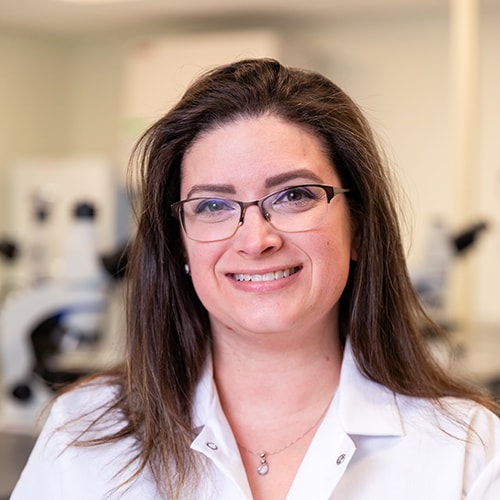
The MLS curriculum emphasizes advanced theory, critical analysis, and leadership within the laboratory. Our goal is to prepare graduates who are confident not only in technical performance, but in professional judgment.
Malissa Norfolk,
Assistant Professor of Medical Laboratory Technology
In this program, you’ll move beyond routine testing to refine and elevate your expertise. You’ll engage deeply with advanced theory, complex case analysis, and the clinical reasoning that defines high-level laboratory practice.
You’ll also expand your professional skill set in communication, quality systems, and regulatory standards, preparing you for increased responsibility and leadership within the laboratory.
Core coursework includes advanced topics in Hematology, Clinical Chemistry, Molecular Techniques, and additional upper-level laboratory science subjects. Visit the catalog for full course details.
Meet the Faculty
Our faculty are experienced laboratory scientists and educators whose careers reflect advanced clinical practice, quality leadership, and service to healthcare organizations across Maine, and beyond. They bring rigor, relevance, and real-world insight to every course, preparing you to meet the highest standards of modern laboratory medicine.